
What Full-Service Interior Design Really Includes, From Concept to Installation

Full-service interior design is often misunderstood.
For many homeowners, it can sound like a broad phrase that simply means hiring a designer to help make a home look beautiful. While beauty is certainly part of the work, full-service interior design is much more layered than that.
At its best, full-service design is a thoughtful, highly organized process that guides a project from the first conversation to the final installation. It includes creative direction, planning, sourcing, selections, coordination, problem-solving, and the many details that make a finished home feel deeply personal rather than simply decorated.
For clients across Chicago, Wilmette, the North Shore, and beyond, R. Jane Morgan Interior + Design approaches full-service interior design as a complete experience. The goal is not only to create a beautiful home, but to create a home that feels collected, livable, and connected to the people who live there.
It Begins With Understanding The Home, And The People Who Live There
Every full-service project begins with conversation.
Before any selections are made or any drawings are reviewed, the first step is to understand the home, the client, and the way the space needs to function in daily life. A home should reflect more than a style preference. It should reflect how a family lives, entertains, rests, works, gathers, and moves through the day.
This early stage is where the foundation is set.
A discovery call allows the designer and client to talk through the project, the scope, the goals, the timeline, and the questions that naturally come with beginning a larger interior design project. It is also a chance to understand whether the relationship feels like the right fit.
That fit matters.
Full-service design is a close and collaborative process. The designer is helping shape the most personal spaces in a client’s life, so trust, communication, and clarity are essential from the beginning.
The In-Home Consultation Brings The Project Into Focus
After the initial conversation, the process moves into a more detailed in-home design consultation.
This is where the designer can see the space in person, understand the architecture, study the flow of the home, take measurements, and begin identifying both the opportunities and the challenges.
Some homes need a more thoughtful furniture plan. Some need better lighting. Some need new finishes, custom furnishings, window treatments, or a stronger connection between rooms. Others may need a full renovation plan that includes kitchens, bathrooms, millwork, architectural details, and project management from beginning to end.
The in-home consultation helps define the real scope.
It is also where priorities become clearer. A client may know how they want a room to feel, but not yet know what needs to happen to get there. This is where an experienced designer can help translate ideas into direction.
Design And Research Are Where The Vision Takes Shape
Once the scope is clear, the project moves into design and research.
This is one of the most important parts of a full-service interior design project because it is where the vision becomes tangible. Inspiration is refined, materials are studied, layouts are developed, and the overall design direction begins to take shape.
This stage may include mood boards, color palettes, floor plans, finish selections, furnishings, lighting, textiles, art direction, antiques, custom pieces, and the many details that give a home its character.
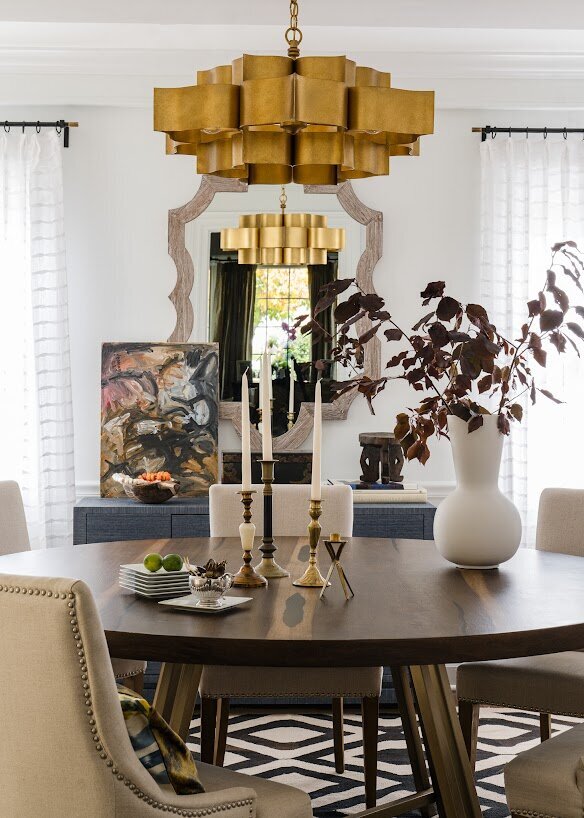
For R. Jane Morgan Interior + Design, this part of the process is not about creating a room that feels overly new or showroom-like. The goal is to create interiors that feel layered over time.
That might mean mixing antiques with modern art, pairing refined furnishings with unexpected pattern, or choosing materials that bring warmth, texture, and personality to a space. The details should feel intentional, but never forced.
A beautiful room is not created from one decision. It is created through many thoughtful decisions working together.
The Design Presentation Gives Clients Clarity
A full-service interior design project includes a formal design presentation.
This is where the client can see how the space will come together before major decisions are finalized. The presentation may include layouts, furnishings, finishes, fabrics, lighting, visual references, and other design elements that help the client understand the full direction.
This part of the process is important because it brings clarity.
Instead of making isolated decisions one at a time, the client can see how everything connects. The sofa relates to the rug. The window treatments relate to the wall color. The lighting relates to the architecture. The art, antiques, textiles, and furnishings all begin to tell the same story.
For many homeowners, this is the moment when the project begins to feel real.
It also helps reduce decision fatigue. Rather than being overwhelmed by endless choices, the client is presented with a clear, thoughtful, edited direction.
Full-Service Design Includes Project Management
One of the biggest differences between full-service interior design and smaller design services is project management.
Designing a home is not only about choosing beautiful things. It also involves ordering, tracking, coordinating, communicating, troubleshooting, scheduling, and making sure the many pieces of the project continue moving forward.
This can include coordination with vendors, workrooms, trades, contractors, installers, fabricators, and delivery teams. It may also involve site visits, approvals, revisions, and the practical problem-solving that happens behind the scenes.
This part of the process is often invisible to the client, but it is essential to the final result.
A well-managed project allows the client to feel supported rather than overwhelmed. It also helps protect the integrity of the design so that the final home reflects the original vision.
Installation Is Where Everything Comes Together
Installation is the stage most clients look forward to, and for good reason.
After months of planning, sourcing, ordering, and coordination, the home begins to transform. Furniture is placed, art is hung, rugs are laid, lighting is adjusted, beds are made, accessories are styled, and the details are brought into balance.
This is where the project moves from concept to completion.
A successful installation is not only about placing items in a room. It is about creating rhythm, warmth, proportion, and a sense of ease. It is the moment when the layers begin to feel natural, as though they have always belonged there.
For R. Jane Morgan Interior + Design, the final reveal is about more than seeing a beautiful room. It is about helping clients experience their home in a new way.
Full-Service Interior Design Is About The Whole Home Experience
The value of full-service interior design is not only in the final images.
It is in the confidence a client feels throughout the process. It is in having someone experienced to guide decisions, manage details, and protect the larger vision. It is in knowing that the home is being considered as a whole, not just as a collection of separate rooms.
A well-designed home should feel personal. It should have layers, history, comfort, beauty, and meaning. It should support the way a family lives while also giving them spaces that feel special, refined, and complete.
That is what full-service interior design is meant to provide.
Is Full-Service Interior Design Right For Your Project?
Full-service interior design is often the best fit for homeowners who want a complete, guided process. It is especially helpful for larger furnishing projects, renovations, whole-home updates, primary bedrooms, kitchens, bathrooms, and homes where many decisions need to work together.
It may also be the right fit if you want a home that feels deeply personal, but do not want to manage every detail alone.
For clients in Chicago, Wilmette, Winnetka, Glencoe, Lake Forest, Evanston, Hinsdale, Oak Brook, and the surrounding areas, R. Jane Morgan Interior + Design offers a thoughtful full-service approach from the first conversation through installation.
If you are beginning to think about a larger interior design project, the best place to start is with a discovery call.
A beautiful home does not happen all at once. It comes together through clarity, trust, experience, and the right process.
What Full-Service Interior Design Really Includes, From Concept to Installation
What Full-Service Interior Design Really Includes, From Concept to Installation
What Full-Service Interior Design Really Includes, From Concept to Installation
What Full-Service Interior Design Really Includes, From Concept to Installation
What Full-Service Interior Design Really Includes, From Concept to Installation
What Full-Service Interior Design Really Includes, From Concept to Installation
Recently on the blog


